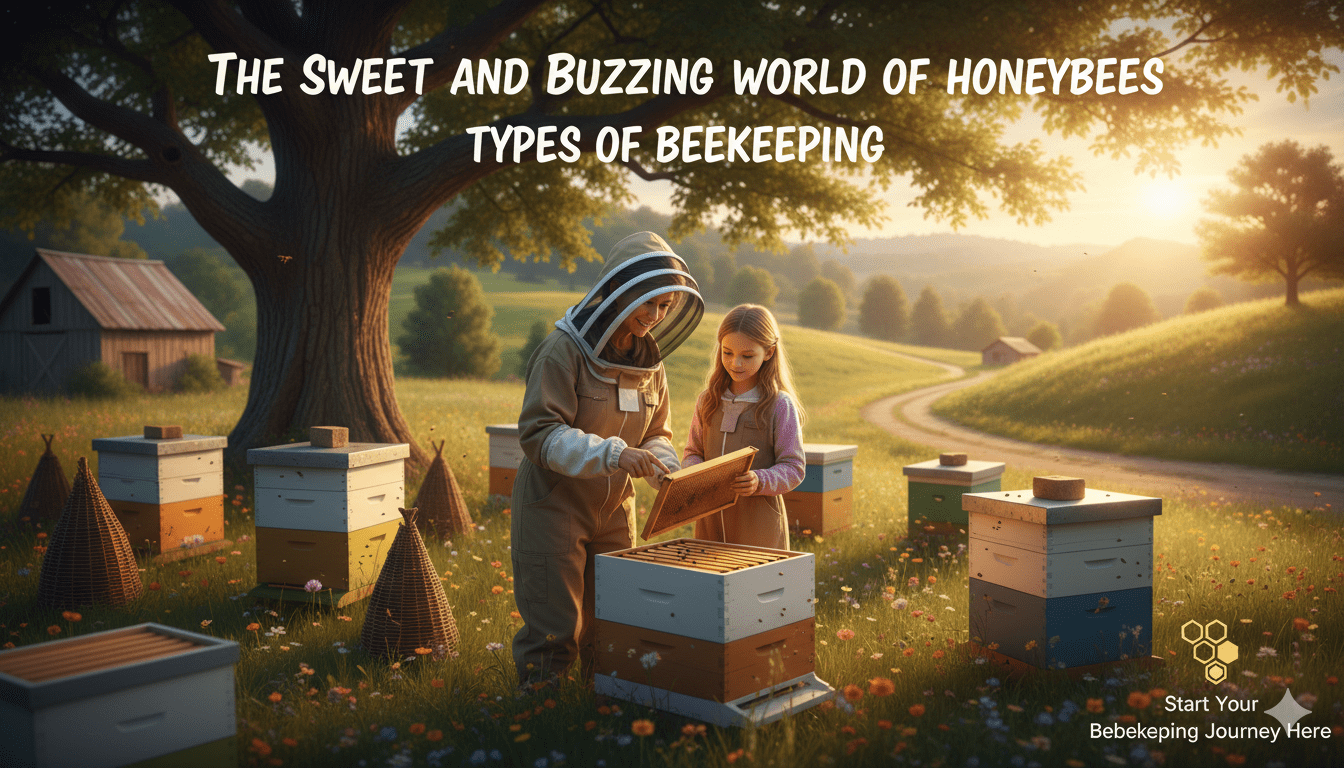
Welcome to the sweet and buzzing world of honeybees! Types of Beekeeping If you are thinking about starting this hobby, you are in the right place. Many people feel a bit nervous when they first see a bee, but don’t worry. These tiny creatures are amazing partners for your garden. In this guide, we will look at the different Types of Beekeeping so you can pick the best path. Whether you want a lot of honey or just want to help nature, there is a style for you. I remember my first time opening a hive; my heart was racing, but once I saw the bees working, I felt so calm. It is a hobby that changes how you see the world around you.
What Are the Main Types of Beekeeping?
When we talk about the Types of Beekeeping, we usually look at two main goals. Some people do it for business, while others do it for fun or to help the earth. Backyard beekeeping is very popular because it lets you watch nature from your porch. On the other hand, commercial beekeeping involves hundreds of hives moved from farm to farm. Most beginners start with natural beekeeping. This style focuses on the health of the bees rather than just getting the most honey. It is a gentle way to learn how bees live and work together in their tiny, busy cities.
Choosing Your First Types of Beekeeping Hives
Choosing between the various types of beekeeping hives is your most important decision. The most famous one is the Langstroth hive, which looks like a tall chest of drawers. It is great because you can add more boxes as the colony grows. Then there is the Top Bar hive, which is shaped like a long trough. It is much easier on your back because you do not have to lift heavy boxes. Some people also love Warre hives, which try to mimic a hollow tree. Each of these types of beekeeping hives has pros and cons, but they all provide a safe home for your bees.
Staying Safe with Types of Beekeeping Suits
You might be wondering if you will get stung. Safety is very important, which is why we use different types of beekeeping suits. A full suit covers you from your head to your ankles. This is the best choice for new beekeepers who feel a bit shy around the bees. These suits are usually white because light colors keep the bees calm. If you live in a very hot place, you can find ventilated suits that let the breeze through. No matter which of the types of beekeeping suits you pick, make sure it fits loosely so the bees cannot reach your skin.
Protecting Your Face with Types of Beekeeping Veils
Even if you don’t wear a full suit, you must protect your face using different types of beekeeping veils. The veil is a mesh screen that keeps bees away from your eyes, nose, and mouth. There are round veils that give you a wide view of everything around you. There are also fencing veils that zip right onto your jacket for extra security. Some older beekeepers just use a simple hat with a net. I always tell my friends that choosing between these types of beekeeping veils depends on how much you want to see. A clear view makes it easier to spot the queen bee!
Professional Beekeeper Profile
| Detail | Information |
| Expert Name | Master Beekeeper Sam |
| Years of Experience | 15+ Years in Apiculture |
| Specialty | Natural Bee Health & Education |
| Favorite Hive Type | Top Bar Hive |
| Main Goal | Pollinator Conservation |
| Location | Sustainable Family Farm |
Why Urban Beekeeping is Growing Fast
Many people think you need a giant farm for the different types of beekeeping, but that is not true! Urban beekeeping is happening on rooftops and in tiny city gardens everywhere. Bees actually do very well in cities because there are so many different flowers in parks. Since cities stay a bit warmer at night, the bees have a longer season to find food. Just make sure to check your local rules before you set up your hive. It is a wonderful way to bring a little bit of the wild into a busy concrete city.
The Role of Backyard Beekeeping
Backyard beekeeping is perhaps the most rewarding of all the types of beekeeping. It allows families to learn about biology right in their own yard. You get to see the bees bring in colorful pollen on their legs every afternoon. Plus, you get the freshest honey you have ever tasted! When you practice this style, you become a guardian for your local environment. You will start to notice which flowers the bees like best. It creates a deep bond between you and the rhythm of the seasons, from the first spring bloom to the winter rest.
Natural vs. Intensive Beekeeping Styles
There are big differences in the types of beekeeping when it comes to how you treat the bees. Intensive beekeeping is often used by big honey companies to get as much product as possible. They might feed the bees sugar water or use more chemicals. Natural beekeeping is the opposite. It lets the bees build their own wax and keep enough of their own honey for winter. Most hobbyists prefer the natural way because it feels more respectful. It is about keeping the bees happy and healthy first, and getting a little honey as a thank-you gift.
Essential Tools for All Types of Beekeeping
Besides your hive and suit, you need a few more things to get started with most types of beekeeping. A smoker is your best friend because the cool smoke tells the bees to stay calm and eat honey. You also need a hive tool, which looks like a small metal pry bar. Bees use “propolis,” which is like sticky bee glue, to seal everything shut. The hive tool helps you pop the frames loose without shaking the bees too much. Learning to use these tools gently is a skill that comes with a little bit of practice.
How to Choose the Right Location
No matter what types of beekeeping you choose, where you put the hive matters a lot. Bees love the morning sun because it warms them up so they can start flying early. You should also make sure they have a “windbreak,” like a fence or a hedge, to protect them from cold gusts. It is also smart to keep the hive entrance away from busy walkways. This way, the bees can fly in and out without bumping into your neighbors or pets. A happy, quiet spot makes for a very successful and peaceful honeybee colony.
Finding Your Community of Beekeepers
One of the best parts of exploring the types of beekeeping is meeting other people who love bees. Most towns have a local beekeeping club where experts share their secrets. Joining a club is the fastest way to learn because you can ask questions and see their hives. You might even find a mentor who can help you during your first year. Having a friend to call when you aren’t sure what the bees are doing is very helpful. Beekeeping is a big journey, but you don’t have to walk the path all by yourself.
Frequently Asked Questions (FAQs)
1. Which of the types of beekeeping hives is best for kids?
The Langstroth hive is often best because it is the most common and easy to find parts for. However, many families like Top Bar hives because they are at a height where kids can see in easily.
2. Do I really need to buy one of the types of beekeeping suits?
Yes, especially when you are learning. While expert beekeepers sometimes go without suits, a full suit keeps you calm. If you are calm, the bees stay calm too!
3. Are there different types of beekeeping for honey versus wax?
Generally, all types produce both. However, if you want more wax, you might choose a hive style where the bees have to build new comb more often, like a Top Bar or Warre hive.
4. How much time does backyard beekeeping take?
Most types of beekeeping only require about an hour of your time once every week or two during the spring and summer. In the winter, you mostly just leave the bees alone to stay warm.
5. Can I use any of the types of beekeeping veils with a regular jacket?
Yes! You can buy “stand-alone” veils that have strings to tie under your arms. These work great with a thick long-sleeved shirt if you don’t want a full suit yet.
6. Is beekeeping expensive to start?
It does cost some money for the initial equipment and the bees. However, once you have your hive and your suit, the yearly costs are actually very low.
Conclusion: Start Your Bee Journey Today!
We have covered so much today about the different types of beekeeping, from the types of beekeeping hives to the safety of types of beekeeping suits and types of beekeeping veils. The most important thing is to just start. Don’t be afraid to make small mistakes, as that is how we all learn. By becoming a beekeeper, you are doing something wonderful for the planet and your own soul. Are you ready to hear the buzz in your own backyard?
About the Author